


Motivational Speaker in India for Creativity and Innovation
How Paul Robinson Can Help Organisations Think Differently
In a business environment defined by constant change, creativity and innovation are no longer optional capabilities. They are essential to an organisation’s ability to remain relevant, solve complex problems, create customer value and discover new opportunities for growth.
Markets evolve, customer expectations shift, technologies disrupt established business models, and competitors introduce new ways of delivering value. Organisations that depend entirely on past successes risk becoming outdated. To thrive, they need people who can challenge assumptions, explore possibilities, experiment with ideas and turn fresh thinking into practical outcomes.
This is why more organisations are looking for a motivational speaker in India for creativity and innovation—someone who can inspire people to think beyond conventional boundaries while equipping them with practical tools to make innovation happen.
Paul Robinson, keynote speaker, business strategist and corporate trainer, works with organisations to develop creative thinking, encourage innovation and build the leadership capabilities needed to navigate change. Through keynotes, workshops and learning sessions, he helps business leaders, research and development teams, and professionals explore how creativity can become part of everyday work rather than remain an occasional exercise.
Having served more than 350 global clients through keynotes and workshops, Paul brings together concepts, case studies, thinking tools and experiential learning to help organisations rethink how they approach innovation.
Discover his work at www.paulrobinson.in.
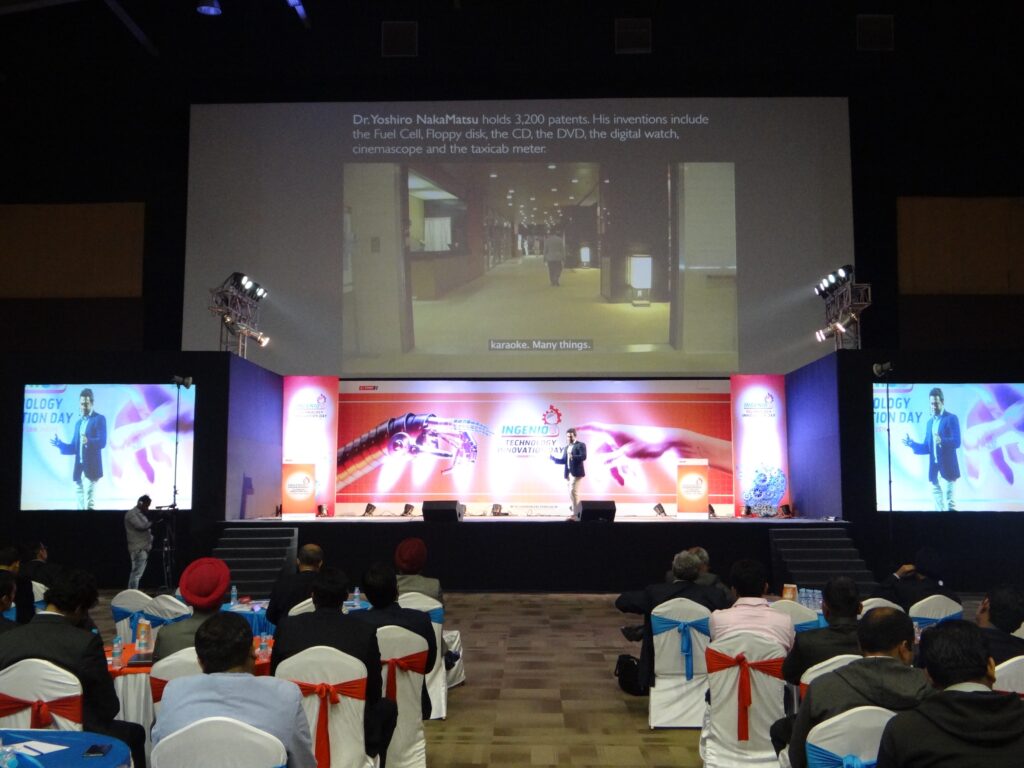
1. Why Creativity and Innovation Matter More Than Ever
For many years, organisations could achieve success by improving existing products, following established processes and competing within familiar markets. Today, the pace of change makes that approach insufficient on its own.
Digital technologies, artificial intelligence, evolving customer preferences and new business models are changing the way industries operate. What worked yesterday may not be enough tomorrow.
Organisations must therefore develop two complementary capabilities: the ability to adapt to change and the ability to create what comes next.
Creativity helps people generate fresh ideas, look at problems from different perspectives and imagine alternative possibilities. Innovation takes those ideas further by turning them into solutions, products, services, processes or business models that create value.
An organisation can have creative employees and still struggle to innovate if its culture discourages experimentation. Equally, it can invest in new technology without generating meaningful innovation if people continue to approach problems with outdated assumptions.
This is where creativity and innovation training can make a difference.
A well-designed programme helps participants question established practices, explore new possibilities, collaborate across functions and identify practical ways to implement ideas.
For organisations searching for a corporate motivational speaker in India on creativity and innovation, the goal should be more than an inspirational presentation. It should be an experience that encourages people to think differently and gives them tools to translate that thinking into action.
2. Paul Robinson: A Creativity and Innovation Speaker for Organisations
Paul Robinson has delivered keynotes and learning sessions for organisations on change, creativity and innovation. His work focuses on helping people recognise opportunities, challenge conventional thinking and understand how innovation can be encouraged within an organisation.
As a keynote speaker and business author, Paul works with different audiences, including business leaders, R&D teams, managers and professionals who want to improve the way they solve problems and develop new ideas.
His sessions explore an important question: how can organisations move from talking about innovation to making it happen?
The answer involves more than brainstorming. It requires the right mindset, an environment that supports new thinking, effective collaboration, leadership commitment and practical methods for evaluating and implementing ideas.
Paul brings these elements together through a combination of innovation concepts, case studies, thinking tools, activities and practical applications.
For organisations seeking a creativity and innovation keynote speaker in India, his approach connects the inspiration of a keynote with the practical challenges of building an innovative workplace.
3. From Constant Change to Fresh Thinking
Change is a permanent feature of modern business. However, organisations respond to change in different ways.
Some react only when circumstances force them to. Others anticipate emerging trends, question their existing assumptions and prepare for different possibilities.
The ability to respond constructively to change is closely connected to creativity and innovation.
When people become too comfortable with established methods, they may stop questioning whether those methods remain effective. Familiarity can create blind spots. Past success can turn into resistance to new ideas.
Paul Robinson’s sessions on adapting to change encourage participants to examine their assumptions and explore different ways of approaching business challenges.
Unlearning what no longer works
Unlearning does not mean discarding everything that has worked in the past. It means recognising when an old belief, habit or process has become a limitation.
A sales team may need to rethink how it engages customers. An R&D team may need to question a familiar approach to product development. A leadership team may need to reconsider how decisions are made or how employees contribute ideas.
The first step is acknowledging that established practices are not necessarily the only possible practices.
Developing a mindset of curiosity
Curiosity encourages people to ask better questions, investigate unfamiliar possibilities and learn from unexpected results.
Instead of asking only how to improve an existing process, teams can ask whether the process is still necessary, whether the problem has been defined correctly and whether a completely different approach might create greater value.
Turning change into opportunity
Change can create uncertainty, but it also creates opportunities to reconsider priorities, explore new markets and develop better solutions.
By encouraging fresh perspectives and practical reflection, a creativity and innovation keynote can help employees see change not only as something to manage, but also as a catalyst for discovery.
4. Leading Innovation: The Role of Business Leaders
Innovation is often treated as the responsibility of a dedicated department, research team or group of creative employees. In reality, leadership has a major influence on whether innovation can flourish across an organisation.
Leaders determine how decisions are made, how resources are allocated, how mistakes are handled and whether employees feel comfortable expressing unconventional ideas.
A company may publicly celebrate innovation while unintentionally discouraging it through excessive approval processes, rigid hierarchies or a culture in which people fear being wrong.
Leading innovation begins with creating the conditions in which people can think, experiment, collaborate and act.
Paul Robinson delivers learning sessions on Leading Innovation for corporate leaders, helping them examine the behaviours and organisational conditions that support creativity.
Create psychological safety
People are more likely to share ideas when they believe they can speak honestly without being ridiculed or unfairly penalised. Leaders can encourage this by listening openly, inviting different viewpoints and responding constructively to suggestions.
Psychological safety does not mean eliminating accountability. It means allowing people to question assumptions, raise concerns and learn from well-intentioned experiments while maintaining clear standards.
Encourage experimentation
Innovation involves uncertainty. Not every idea will succeed, and not every experiment will produce the expected result.
Leaders can support innovation by encouraging teams to test assumptions on a manageable scale, learn from evidence and improve their ideas before committing significant resources.
Break down organisational silos
Ideas often emerge when people with different experiences and expertise work together. Leaders can encourage collaboration between departments, functions and teams rather than allowing knowledge to remain isolated.
Connect creativity with strategy
Not every new idea is strategically useful. Leaders must help teams identify which opportunities align with customer needs, organisational priorities and available capabilities.
Paul’s Leading Innovation sessions explore how leadership behaviours can encourage creative thinking while ensuring that ideas remain connected to business outcomes.
5. Understanding Different Models of Innovation
Innovation is not a single activity. Organisations can innovate in different ways depending on their goals, market conditions, capabilities and appetite for risk.
Paul Robinson has developed an innovation course that explores different forms of innovation, including continuous, discontinuous or disruptive, breakthrough, customer-centric and open innovation.
Understanding these models helps teams recognise that innovation does not always require inventing something entirely new. Sometimes the greatest opportunity lies in improving what already exists; at other times, it requires challenging the assumptions on which an industry operates.
Continuous innovation
Continuous innovation involves making ongoing improvements to products, services, processes and ways of working.
A company may simplify a customer onboarding process, reduce production waste, improve a digital interface or make a service more responsive.
Individually, these changes may appear modest. Over time, however, continuous improvements can strengthen customer experience, operational efficiency and competitiveness.
Continuous innovation works best when employees are encouraged to identify everyday problems and suggest practical improvements.
Discontinuous and disruptive innovation
Discontinuous innovation involves a significant departure from established approaches. Disruptive innovation, in a more specific business sense, describes changes that can reshape markets and challenge established competitors, often through a different value proposition or business model.
Such innovation requires organisations to question assumptions about customers, pricing, distribution, technology and the way value is created.
Leaders must be willing to examine emerging threats and opportunities rather than relying exclusively on current revenue streams.
Breakthrough innovation
Breakthrough innovation seeks a substantial advance in performance, capability or customer value.
It may involve a new technology, a novel product, a different service experience or a fundamentally improved way of solving a problem.
Breakthrough innovation often requires cross-functional collaboration, investment, experimentation and a willingness to explore ideas whose outcomes are not immediately predictable.
Customer-centric innovation
Customer-centric innovation begins with a deep understanding of customer needs, frustrations, behaviours and aspirations.
Instead of developing solutions simply because technology makes them possible, teams investigate what customers actually need and how existing experiences could be improved.
Customer interviews, observation, feedback, journey mapping and prototype testing can help organisations uncover opportunities that may otherwise remain hidden.
Open innovation
Open innovation involves drawing on ideas, knowledge and capabilities from beyond an organisation’s internal boundaries.
Depending on the context, this may involve customers, suppliers, research institutions, technology partners, startups or other collaborators.
The approach recognises that valuable ideas can emerge from many sources and that organisations do not need to develop every capability independently.
For corporate teams, understanding these different innovation models creates a broader range of options when responding to business challenges.
Innovation Thinking Tools: Turning Ideas into Action
One of the distinctive elements of Paul’s innovation training is its focus on thinking tools for innovation.
Inspiration can encourage people to consider new possibilities, but practical tools help them structure their thinking, investigate opportunities and move towards implementation.
The objective of innovation training is therefore not simply to generate more ideas. It is to improve the quality of thinking that produces them and increase the likelihood that promising ideas can be implemented.
6. Creativity and Innovation Training for R&D Teams
Research and development teams are expected to explore possibilities, solve technical problems and develop products or services that meet evolving market needs. Yet even experienced teams can become constrained by familiar methods, departmental boundaries or assumptions about what is technically possible.
Creativity and innovation workshops can help R&D professionals examine problems from different perspectives and explore alternative pathways.
Paul Robinson has worked with R&D teams to help ignite a culture of creativity and innovation. His sessions can support conversations around questioning assumptions, collaborative problem solving, experimentation and the relationship between technical development and customer value.
An R&D team may develop a technically impressive product, but innovation also depends on whether the product addresses a real customer need, can be delivered effectively and creates a compelling reason for customers to adopt it.
Bringing together technical knowledge, customer understanding and creative thinking can help teams consider the broader context of innovation.
A workshop can also encourage people to share knowledge across disciplines, learn from unsuccessful experiments and identify opportunities that may be missed when teams work in isolation.
For companies searching for innovation training for R&D teams in India, a customised programme can connect creative thinking methods with the organisation’s specific innovation challenges.
7. Building an Organisational Culture Where Innovation Can Flourish
Innovation is difficult to sustain when it depends on a few enthusiastic individuals. Organisations need an environment where creativity is encouraged consistently and promising ideas have a path towards implementation.
This requires attention to leadership, culture, communication, collaboration and decision-making.
Make idea-sharing part of everyday work
Employees should have opportunities to raise suggestions, question processes and contribute to improvements. Innovation need not be confined to formal brainstorming sessions or annual events.
Encourage constructive challenge
Teams should be able to question existing practices without making discussions personal. Leaders can model this behaviour by asking why a process exists, what evidence supports it and whether a better alternative is possible.
Reward learning as well as outcomes
Not every experiment will succeed. Organisations can recognise the quality of the learning process, provided experiments are responsible, risks are considered and lessons are shared.
Enable cross-functional collaboration
Innovation often requires perspectives from different parts of the business. Collaboration between sales, marketing, operations, technology, finance and R&D can help teams develop more complete solutions.
Establish a path from idea to implementation
Employees need to understand what happens after an idea is proposed. Organisations can create processes for assessing opportunities, running pilots, allocating resources and evaluating results.
Paul’s innovation training helps leaders examine these conditions and consider how their own behaviours can either enable or restrict creative thinking.
8. Creativity and Innovation for CXOs and Business Leaders
Senior leaders face a particular challenge: they must deliver current business results while preparing the organisation for future opportunities and disruptions.
This requires a balance between operational discipline and exploration.
Too much focus on immediate results can leave little room for experimentation. Too much experimentation without strategic direction can waste resources and distract teams from business priorities.
CXOs must determine where the organisation should improve existing operations, where it should explore new opportunities and how it should allocate resources between the two.
Paul Robinson has addressed leadership summits, CXO gatherings and business conferences on adapting to change and leading change. His sessions can help leaders reflect on the mindsets and behaviours needed to encourage innovation while maintaining strategic focus.
Key questions for senior leaders include:
- Which assumptions about our market or customers need to be challenged?
- Where are established processes preventing better outcomes?
- How can we encourage experimentation without ignoring risk?
- Are we creating opportunities for people to contribute ideas?
- How can innovation support our broader business strategy?
- What must we change today to remain relevant tomorrow?
These conversations are particularly valuable for organisations that want innovation to become a leadership priority rather than a standalone initiative.
9. Experiential Innovation Workshops: Learning by Doing
Creativity is difficult to develop through theory alone. People benefit from opportunities to experiment with ideas, work through challenges and experience how different thinking approaches influence outcomes.
Paul Robinson’s sessions use experiential learning, which may include activities, fun games, group exercises, discussions, case studies and reflection.
These activities can help participants experience the importance of collaboration, flexibility, questioning assumptions and considering alternative solutions.
A team exercise, for example, may reveal how quickly people settle on the first idea, how easily familiar roles influence participation or how different perspectives can improve a solution.
The facilitator can then connect the experience to real organisational situations and encourage participants to identify what they might do differently at work.

Experiential innovation training can help participants:
- Challenge habitual thinking patterns.
- Develop greater confidence in exploring ideas.
- Improve collaborative problem solving.
- Recognise the value of different perspectives.
- Understand how innovation tools can be applied.
- Identify practical actions to support innovation within their teams.
For organisations seeking an interactive creativity and innovation workshop in India, this approach makes the learning experience more engaging while keeping the focus on workplace application.
10. Keynotes and Workshops Tailored to Corporate Objectives
Different organisations need different forms of innovation support. A leadership summit may require a keynote that introduces new perspectives, while an R&D team may benefit from a workshop focused on problem solving and innovation methods.
Paul Robinson delivers keynotes and workshops on creativity, innovation and change that can be tailored to the audience and the event’s objectives.
His sessions can be relevant for:
Corporate innovation conferences: Inspiring employees to challenge conventional thinking and explore new opportunities.
Leadership and CXO summits: Helping leaders understand how to create the conditions for innovation.
R&D and product development teams: Encouraging fresh thinking, collaboration and customer-focused problem solving.
Sales and marketing teams: Exploring new approaches to customer value, differentiation and business development.
Organisational change programmes: Helping employees reconsider assumptions and respond constructively to change.
Annual corporate meets and offsites: Creating shared conversations around innovation, adaptability and future readiness.
Before a session, organisers can discuss the audience, conference theme, organisational context and desired outcomes with Paul. This allows the programme to be aligned with the event rather than delivered as a generic motivational talk.
Conclusion: Inspire Creativity. Lead Innovation. Create New Possibilities.
In a world of constant change, organisations cannot depend entirely on yesterday’s ideas to solve tomorrow’s challenges. They need people who can question assumptions, explore new possibilities, collaborate across boundaries and turn creative thinking into meaningful value.
Creativity generates possibilities. Innovation gives those possibilities direction and practical application. Leadership creates the environment in which both can flourish.
For organisations looking for a motivational speaker in India for creativity and innovation, Paul Robinson brings together keynote speaking, corporate training, innovation thinking tools, leadership development and experiential learning.
Through his sessions on change, creativity, innovation models and leading innovation, Paul encourages teams to move beyond familiar patterns and discover better ways of thinking and working.
Whether you are planning a corporate innovation conference, an R&D workshop, a leadership summit, a CXO gathering or an organisational offsite, a customised keynote or workshop can help your people explore new perspectives and build a stronger innovation mindset.
Invite Paul Robinson to help your organisation challenge conventional thinking, unleash creativity and turn innovation into action.
Visit www.paulrobinson.in to learn more about his keynotes, workshops and innovation learning programmes.